
Back in the day, Keywords were the bread-and-butter of any sort of content, no matter how important or useless the content would be.
It was like this,
- Stuffing exact match keywords across content to boost rankings.
- Targeting fixed keyword density instead of natural flow.
- Relying on meta keyword tags for SEO signals.
- Using exact match domains to rank quickly on Google.
These methods used to work in a prehistoric era, but times have changed.
So, are keywords still important for SEO?
Search engines now read the intent of your content, not just words, making keywords obscure if they lack genuine context or purpose.
Keywords are no longer the backbone for optimization.
What Are Keywords in SEO?
Keywords in SEO are the exact words and phrases your audience types into Google when searching for answers.
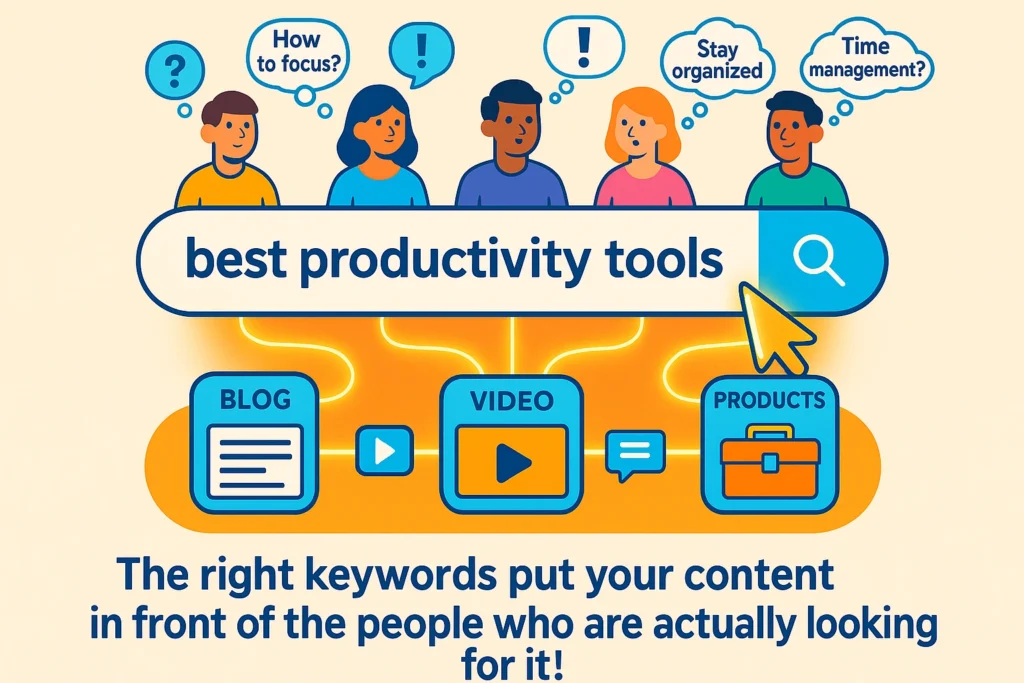
Using the right keywords helps you show up in front of the people who are actually looking for what you offer.
A perfect KW can be the right growth factor for your marketing journey. Using the right keywords helps you show up in front of the people who are actually looking for what you offer.
Besides the KWs, Search engines also consider content quality, user experience, page speed, backlinks, and site structure when ranking pages.
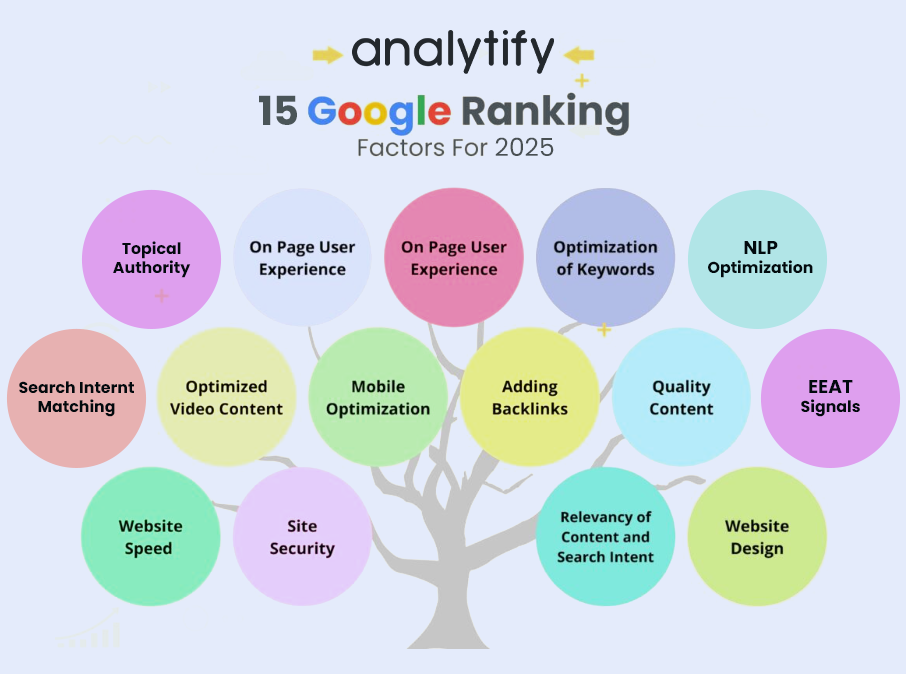
Combining these elements with relevant keywords increases your chances of attracting the right audience and converting visitors into customers.
7 Reasons Why Keywords Still Matter in 2025
Well, even though there are a hundred other ranking factors, KW still holds some potential. They’re just smarter, and if you ignore them, Google will politely ignore you back.
1. Clarifying User Intent Improves Your SEO
Understanding what your audience really wants is half the battle in SEO. Keywords aren’t just random words you sprinkle around; they’re clues to what people are looking for.
When you use the right keywords, you give Google a clear signal about your content’s purpose.
This helps you attract the right audience, the ones who actually care about what you offer.
In that matter, you can –
- Add fewer keywords throughout your content.
- Include LSI keywords for further analysis.
- Add the main KW 4 to 5 times maximum.
- Prioritize including keywords in the introduction, meta description, conclusion, and other headings.
By doing these, you avoid wasting time chasing visitors who will bounce in seconds. It also helps you structure your content naturally, so it flows and reads well.
Think of it as speaking your audience’s language; the better you speak it, the more likely they are to engage. Even small tweaks in keywords can clarify your message.
2. Planning Content Strategically Boosts Engagement
When you plan content around the right keywords, you’re basically giving your content a roadmap.
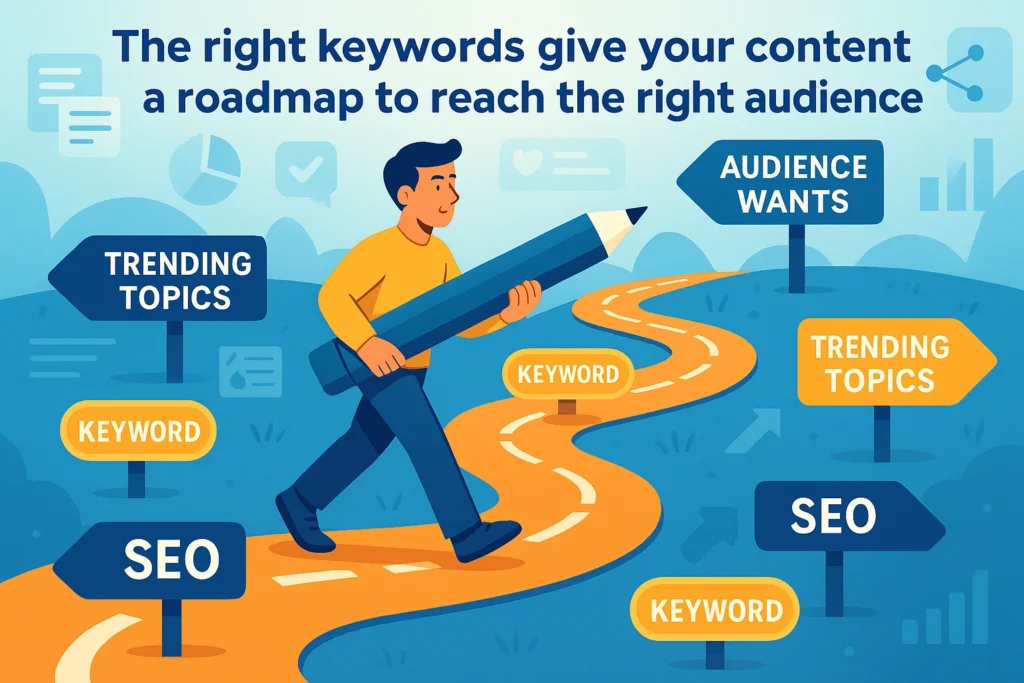
You know what topics to cover, how to structure your posts, and what your audience actually wants to read.
This makes your articles, videos, or guides more useful and enjoyable. People stick around longer when your content answers their questions.
Longer engagement signals to Google that your page is valuable. You also avoid guessing what to write about next, keywords guide your editorial calendar and help you to build a perfect content marketing strategy.
Also, planning strategically saves you from content chaos.
3. Signaling Relevance Helps Google Understand Your Pages
Every keyword you use tells Google what your page is about.
Think of it as leaving breadcrumbs for the search engine to follow. When Google understands your content clearly, it’s more likely to rank it for the right searches.
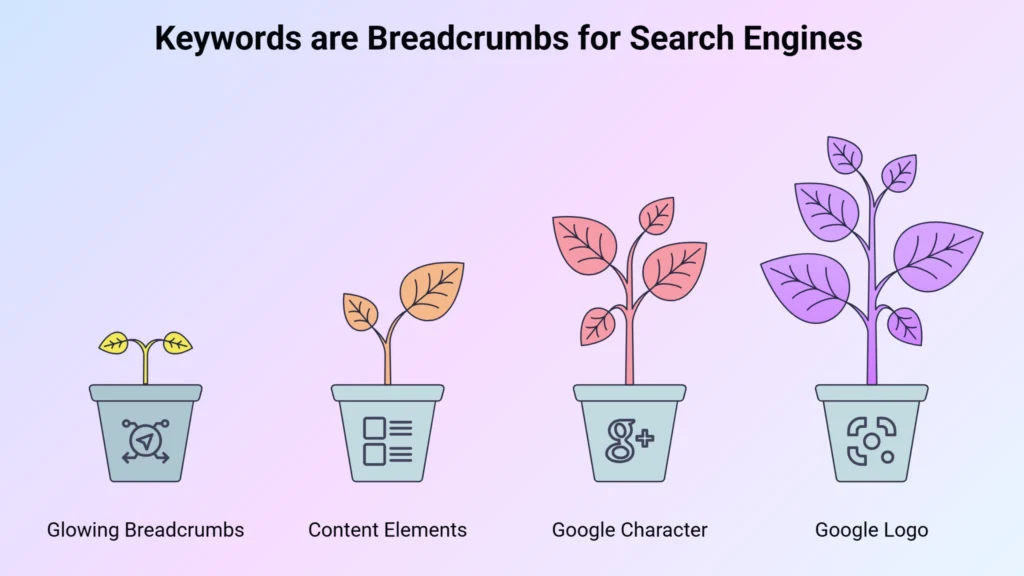
Well, it means your pages reach people who actually want your information, not random clickers.
What you can do is,
- Use keywords like breadcrumbs for Google to follow.
- Make your content clear so it ranks for the right searches.
- Reach the people who actually want your information.
- Avoid confusion by using keywords thoughtfully.
- Align your content with what people type in search.
Using keywords thoughtfully also avoids confusion; you’re not just throwing words around. When your content aligns with what people type in search, you become relevant in Google’s eyes.
Relevance improves trust, clicks, and overall visibility.
4. Optimizing for Voice and Conversational Search Expands Reach
Voice search is growing fast, and people talk differently than they type. They ask full questions, casual phrases, and even funny queries sometimes.
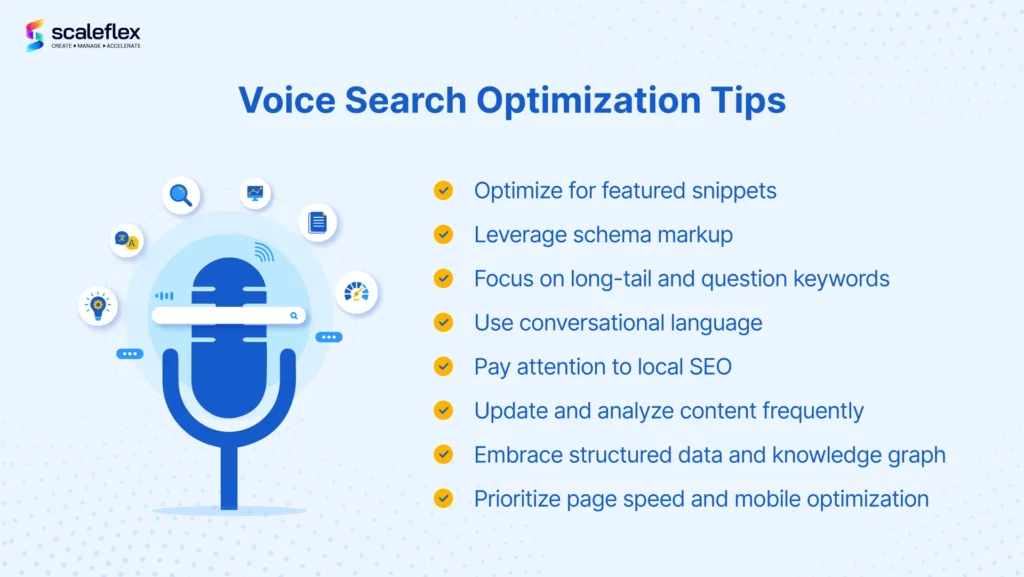
Using conversational keywords helps your content match how people actually speak.
This makes your pages more likely to appear in voice searches on phones, smart speakers, or assistants. It’s not just about typing “best SEO tips” anymore; people ask, “Hey, what’s the easiest way to learn SEO?”
If your content answers that naturally, you get extra visibility.
5. Enhancing Visibility in Snippets Drives Clicks
Featured snippets are like the golden tickets of Google; they grab attention before anyone even scrolls.
The right keywords increase your chance of landing in these spots.

Snippets usually pull answers directly from your content, so having clear keywords and phrases is crucial.
When your content shows up here, people see you as an authority instantly. Click-through rates usually go up because your snippet looks helpful and trustworthy.
6. Enhancing Visibility in Snippets Drives Clicks
Keywords aren’t just about your content; they tell you what your competitors are doing too.
By studying which keywords work for them, you get a shortcut to understanding the market. You can see gaps, opportunities, and trends before everyone else.
This helps you craft content that’s smarter, faster, and more targeted. You avoid repeating what’s already out there and focus on what really matters to your audience.
Keywords give you insight into the demand, the questions people ask, and even seasonal spikes.
It’s like having a spyglass for the SEO battlefield.
7 Best Browser for ChatGPT in 2025 for Faster and Safer Chats
7. Connecting Content, Links, and Analytics Strengthens Results
Keywords don’t work in isolation; they connect everything in your marketing. They help you link related content naturally, boost internal linking, and make analytics more meaningful.
When you track performance, keywords tell you what’s working and what’s not. This makes reporting easier and decisions smarter.
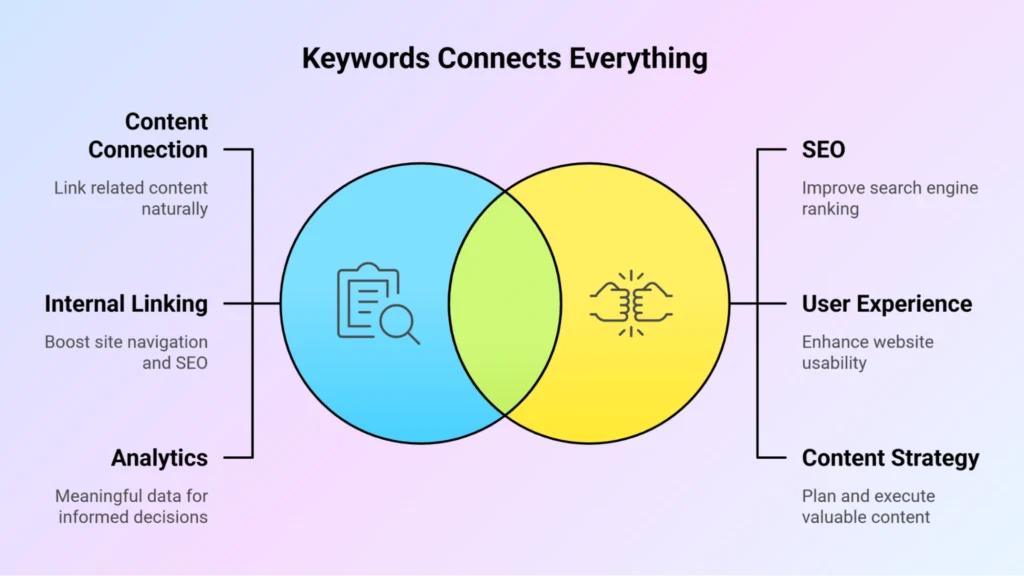
They also guide outreach; you know which topics are worth building backlinks for. Over time, this connection creates a strong SEO ecosystem.
Your content, links, and insights all work together, powered by the right keywords.
FAQ
Keywords Still Have Value
If you’re wondering, are keywords still important for SEO? The answer is a thoughtful yes.
Keywords remain a foundational signal that helps search engines understand the context and intent of your content. Algorithms have evolved, so stuffing keywords alone won’t cut it.
Use them smartly with intent and trends to prevent Google from ghosting you.
In today’s SEO game, keywords aren’t the Hero, but they’re still your trusty Sidekick.
Your point of view for keywords just change my mind.